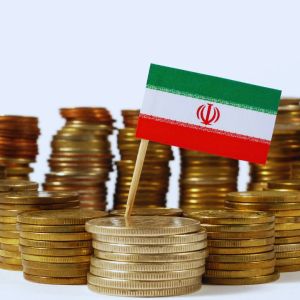
Iran has been exploring plans to use digital assets to bypass sanctions from the United States and the United Nations. According to various Iranian government officials and businessmen, the country has urged India and other countries in the BRICS bloc to accept digital assets whenever they carry out trades. In August 2025, France, Germany, and the United Kingdom initiated a snapback mechanism, which saw international sanctions once again levied on Iran after a brief pause. The sanctions came in response to Iran’s alleged increased uranium enrichment activities and curbed access by International Atomic Energy Agency officials. The United States has also been levying various degrees of sanctions on Iran since at least 1979, with one major impact of the sanctions being that Iran is cut off from the international SWIFT payment system. Iran urges BRICS countries to accept crypto during trades Speaking at the deBlock Summit, Iran’s first international blockchain conference, which is backed by the government, Mohammed Bagher Ghalibaf, Speaker of the Iranian Parliament, lauded cryptocurrencies. “Cryptocurrencies provide new ways to do business and to pay for trade,” Ghalibaf said. “So, they can support independent nations. We want Iran to become a regional, and even global hub in blockchain technology and digital trade.” Ghalibaf mentioned that Iran wants to do trade in other countries and pay in digital assets, noting that it is a necessity for the country. The speaker also mentioned that integrating digital assets requires the right technologies, something that the Iranian government has been working on for a while. “The Iranian Parliament hereby declares its readiness to work with academics, researchers, and businesses in this area,” Mr. Ghalibaf said. “We want to attract as much investment as possible in digital currencies.” Pooria Asteraky, chairman of the deBlock Summit, claimed that digital assets, while being a decentralized form of money, are also a technological tool that can help them achieve their goals of de-dollarization. This means a move away from using the United States dollar as the primary currency for international trade. He highlighted that digital assets could breach this gap because they are not run by any government or political bloc, noting that it is the first tool that can help achieve de-dollarization. Mr Asteraky also mentioned that BRICS was formed with the intention of getting rid of centralization and reducing the role of the dollar, noting that it could help countries reduce the amount of dollars held among their assets. United States President Donald Trump has repeatedly issued warnings to BRICS nations , asking them to desist from forming a BRICS currency and move away from the dollar. At some point, Trump even threatened to impose tariffs on these countries should they carry on. Private sector calls out the lack of regulation in the crypto space However, despite Ghalibaf’s stance, the private sector isn’t convinced, with its participants noting that Iranian regulations concerning crypto and blockchain are not at a desired level. “There is not a proper transparent regulatory environment for blockchain or cryptocurrencies to prosper,” Ehsan Mehdizadeh, CEO and founder of Wallex Iran, the country’s largest cryptocurrency exchange, said during a panel discussion. Mehdizadeh highlighted that the country cannot be under sanctions and be chasing new financial systems, noting that the regulator lacks a good understanding of blockchain. “The SWIFT payment system has been cut off for us, so perhaps cryptocurrencies and blockchain can help,” Mr. Mehdizadeh said. “Digital and crypto currencies are one way to get around sanctions.” The country’s central bank is the sole regulator for the crypto market in the country. The bank has introduced several restrictions, including blocking gateways that allow the Iranian rial to be converted into digital assets. Crypto mining, the energy-consuming act of creating digital assets, has been allowed, but policymakers are raising questions over the regulation of the sector and its activities. Get seen where it counts. Advertise in Cryptopolitan Research and reach crypto’s sharpest investors and builders.