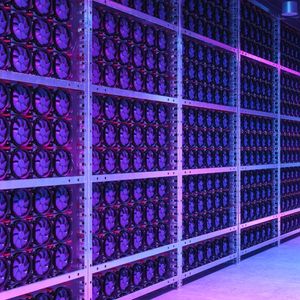
Summary IREN’s stock is up 380% year-to-date, with an additional 80% gain since prior coverage, reflecting massive AI-driven momentum. The company purchased $674 million in Nvidia and AMD GPUs, doubling its fleet to 23,000 units for AI workloads. Contracted grid power expanded to nearly 3 GW, while operating data center capacity tripled to 810 MW during FY25. Annualized revenue now approaches $1.25 billion, bringing forward P/S to ~8.8x, in line with AI infrastructure peer valuations. Risks include Bitcoin volatility, GPU allocation constraints, financing needs for 60,000+ Blackwells, and competition from hyperscalers compressing margins. Investment Thesis Since my recent coverage , IREN Limited ( IREN ) has surged another 80%, delivering a spectacular bull run that now leaves many investors questioning whether it’s time to trim or even exit their positions. IREN has undergone a radical transformation in 2025. Previously written off as one more leveraged Bitcoin ( BTC-USD ) miner, the company's stock has increased by 380% year to date as it pivots in a new direction into AI infrastructure. Announced recently was the $674 million GPU buy from Nvidia ( NVDA ) and AMD ( AMD ) which doubles its fleet to 23,000 units and positions IREN to achieve $500 million in AI cloud annual recurring revenue by Q1 2026. With nearly 3 GW of contracted power, vertically integrated campuses, and preferred partner status with Nvidia, IREN is one of the few serious challengers in AI compute, reaffirming the buy rating for the stock. Data by YCharts What IREN Does and Where it Differs At its core, IREN is both a large-scale miner of Bitcoin and emerging supplier of infrastructure for AI. The company owns the whole stack as it buys renewable-powered contracts, builds and owns self-contained data centers, and owns GPUs directly for cloud infrastructure for AI. That vertical integration affords defensibility in a period in which shortages of power and GPU-friendly locations are the top chokepoints for compute by AI. Canadian locations by IREN operating by best-of-industry efficiency ratios and announced expansion plans for Texas demonstrate its ability to scale quickly with minimal operating costs. Wherein IREN is distinct is in its structural model from peers. CoreWeave ( CRWV ), despite being a market darling, sits highly reliant on leased infrastructure and third-party colocation, which entails cost leakage along with execution risks. Nebius ( NBIS ) has built structural price leadership in selective geos by running day one at day one margins to take share, though sustainable viability over time remains in doubt. IREN, on the other hand, funds growth from mine-related cash flow, utilizes non-dilutive funding for GPUs, and owns all infrastructure full equity. That not only keeps margins financially protected but allows it to move with speed like a cloud-native disruptor and enjoy financial robustness like an infrastructure utility. Scaling the Infrastructure Moat: Power and Efficiency IREN's bull run is constructed from locking up and profiting from scarce inputs with power, GPUs, and low-latency data center capacity. Contracted grid power jumped to ~3 GW in FY25 , and operating data center capacity tripled to 810 MW . Why does it matter? AI implementation is not constrained by demand but by physical limitations in terms of electricity and GPU-capable sites. Sourcing low-cost renewables at as little as 3.5c/kWh in the fourth quarter allows IREN to reap structural margin leadership across both mining and artificial intelligence workloads. Profitability measures confirm that strength. All-in Bitcoin mining costs for the company came at $36,000 per coin in exchange for a realized price of $99,000, yielding margins in excess of 60%. EBITDA jumped over tenfold to $278 million, as net income reversed to $87 million. These metrics confirm that IREN’s effectiveness translates directly into free cash flow, which is the engine for its expansion into AI. Readiness for AI is where IREN excels best. Their Canadian sites have best-of-class PUE levels of ~1.1, and liquid-cooling upgrades are in progress now to serve Nvidia's next-generation GB300 GPUs. These are among North America's most densely packed clusters with 19,000 nodes at Childress and over 60,000 across British Columbia. Vertical integration offers IREN velocity to act quickly and robustness from GPU bottlenecks, advantages shared by hyperscalers themselves. Author GPU Fleet Expansion and Pre-Contracting Hype The recent GPU order for $674 million of 7,100 Nvidia B300s, 4,200 B200s, and 1,100 AMD MI350Xs is historic. Deliveries spaced over the next two quarters will escalate GPU number from 1,900 at fiscal-end to over 23,000 and facilitate IREN’s ambitions of $500 million ARR by March 2026. Note that all of this capacity is already being pre-contracted. Management noted that once initial Blackwell B200 clusters began operation, they became tied to multi-year contracts. That mitigates utilization risk and accelerates payback, with GPUs already pending returns in less than three years. Vertical stack model, owning power, sites, and data centers, ensures IREN maintains margins peers relying on colocation cannot. With zero top-line rent leakage inherent with self-owned infrastructure, IREN enters from a position of financial strength. Half of Prince George already allocated to AI workloads with over 20,000 Blackwells in prospect. Sweetwater, Texas 2GW hub, one day with over 600,000 GB300s. If it comes to pass, it would be comparable to hyperscaler footprints. Financing strategy is no less critical. GPU purchases are financed by low-capex, non-dilutive debt, consistent with hardware paybacks of 24–36 months. With over half a billion dollars in cash and nearly $3 billion in assets on the balance sheet, IREN is shielded from equity dilution, a peril common to miners-turned-AI-plays. FY25 Results Presentation Priced for Perfection or Just Getting Started? Having had such a massive rally of over 380%, one must question if IREN is overextended. On a trailing basis, it is expensive with a Price/Sales ratio of 17.9x compared to sector median 3.7x and EV/Sales of 23.5x compared to 3.7x. Premium is over 500%, which already assumes investors discount IREN less as one would assume from a typical data center provider and more as one would from such a high-growth platform for artificial intelligence. Forward estimates vary. At revenue close to $1.25 billion annualized, forward P/S comes in at 10.4x and EV/Sales at 10.8x. That's still a pricey premium but close to AI infrastructure peer valuations across the 10–15x forward sales multiple range amid contract clarity. If IREN reaches early 2026 targets through $500 million in AI ARR, blended revenue mixes move more to traditional, high-quality revenue streams commanding multiples closer to the peer group's high-end. On earnings, forward P/E is 41x vs. sector median 25.7x, a 60% premium. However, margin profile from mining and from AI signals earnings leverage runs deep as all-in Bitcoin expenses at $36,000 vs. realized price of $99,000 , and AI GPU paybacks within less than three years. If sustained, such operating leverage would compress P/E multiples quickly as ARR scales. At around $49 per share, IREN carries a market cap of roughly $11 billion. On trailing numbers, that looks stretched, However, using the company’s current $1.25 billion annualized revenue run-rate, the forward P/S drops to ~8.8x and EV/Sales to ~9x, well within the 10–15x range where AI infrastructure peers trade. Data by YCharts The Double-Edged Sword of IREN’s AI Ambitions IREN's dual role as miner and infrastructure play for AI runs both ways. Volatility in Bitcoin remains by far the largest threat: a prolonged drop could rob cash flows to fund AI expansion. Dependence on GPU supply is another: despite IREN's status as one among Nvidia's favourite partners, shift in allocation policy by Nvidia would temper deployments. Funding is sustainable now, but scaling to 60,000-plus Blackwells and 2 GW of Texas capacity will take billions more and will involve leverage and refinancing risk. Finally, hyperscaler competition cannot be undervalued. Speed-to-deploy and bare-metal by IREN will be exciting, but giants like Amazon and Microsoft will compress margins once power constraints are mitigated. Takeaway Off a 380%-plus rally, IREN is no longer a contrarian deep-value play but artificial scarcity-driven AI infrastructure play. The stock does carry a noticeable premium to conventional data center and mining peers but continues to enjoy an appealing upside scenario assuming announced GPU deployment and GPU ARR targets are successfully reached by management. With vertically integrated assets and captive-low-cost power and funding commensurate with rapid paybacks, IREN continues to enjoy an advantage that will facilitate additional rerating. The good news is it could become a multi-billion-dollar GPU usage opportunity, the bad news is execution, Bitcoin volatility, and hyperscaler incursion. For investors tolerant of volatility, current configuration is good asymmetry, though by far less margin of safety than earlier entry points.