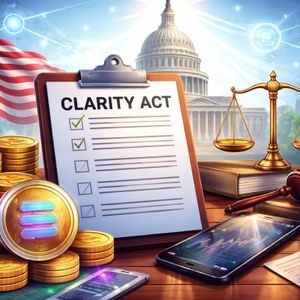
BitcoinWorld US Senate Crypto Bill Faces Critical Delay as Political Priorities Shift Dramatically WASHINGTON, D.C., February 2025 – The United States Senate’s pivotal effort to establish a comprehensive regulatory framework for digital assets has hit another significant roadblock. The Senate Banking Committee’s markup of the landmark crypto market structure bill, known as the CLARITY Act, now faces a potential second delay, pushing critical discussions into late February or March. This development, reported by Bloomberg, signals continued uncertainty for the multi-trillion dollar cryptocurrency industry seeking legal clarity from federal lawmakers. US Senate Crypto Bill Faces Extended Political Gridlock According to an anonymous source familiar with the committee’s schedule, the Banking Committee is shifting its immediate focus to housing policy matters. This strategic pivot comes at the direct request of the Trump administration, which is prioritizing economic and domestic policy initiatives ahead of the crucial November midterm elections. Consequently, the committee’s detailed review and amendment process for the CLARITY Act—formally titled the Crypto-Asset Regulatory Framework and Investor Transparency Act—will likely be postponed. This marks the second scheduling setback for the legislation in recent weeks. The committee initially postponed its markup session on January 15, citing the need for additional review time. The current delay suggests deeper political complexities are influencing the legislative calendar. Committee members must now balance urgent housing policy demands with the long-term need for digital asset regulation. Understanding the CLARITY Act’s Regulatory Framework The proposed legislation represents one of the most comprehensive attempts to date to create a functional regulatory structure for cryptocurrency markets in the United States. Its core objectives include defining jurisdictional boundaries between the Securities and Exchange Commission (SEC) and the Commodity Futures Trading Commission (CFTC). Furthermore, the bill aims to establish clear consumer protection standards and anti-fraud measures for digital asset trading platforms. Key provisions of the CLARITY Act include: Regulatory Classification: Creating a formal process to determine whether a digital asset is a security or a commodity. Exchange Registration: Mandating that cryptocurrency exchanges register with either the SEC or CFTC based on the assets they list. Consumer Safeguards: Implementing rules for custody, disclosure, and conflict-of-interest management. Market Integrity: Establishing surveillance and enforcement mechanisms to prevent market manipulation. The table below outlines the primary regulatory responsibilities proposed under the CLARITY Act: Agency Proposed Primary Jurisdiction Key Responsibilities Securities and Exchange Commission (SEC) Digital assets deemed securities Investor disclosure, broker-dealer regulation, securities fraud enforcement Commodity Futures Trading Commission (CFTC) Digital assets deemed commodities Spot market oversight, anti-manipulation rules, derivatives regulation Joint Responsibilities Hybrid assets & jurisdictional edges Information sharing, coordinated rulemaking, joint enforcement actions Expert Analysis on the Delay’s Market Impact Financial policy analysts note that legislative delays create extended periods of regulatory uncertainty. This uncertainty often impacts business investment decisions and market stability. Dr. Eleanor Vance, a senior fellow at the Center for Financial Innovation, explains the practical consequences. “When comprehensive legislation is postponed, regulatory agencies often continue operating under existing, sometimes inadequate, frameworks,” Vance states. “This gap can lead to enforcement actions that some market participants view as unpredictable or overly aggressive.” Industry representatives have expressed mixed reactions to the news. While some advocate for swift action, others emphasize the importance of getting the regulatory details correct. “A deliberate process is preferable to a rushed one, especially for foundational legislation,” commented Marcus Chen, CEO of a major digital asset exchange. “However, prolonged ambiguity hinders innovation and pushes development to jurisdictions with clearer rules.” The Broader Political Context Shaping Crypto Legislation The delay occurs within a complex political landscape. The Trump administration’s focus on housing policy aligns with broader economic messaging ahead of the midterm elections. Housing affordability remains a top concern for voters, potentially explaining the committee’s reprioritization. This dynamic illustrates how cryptocurrency regulation must compete with other legislative priorities for attention and floor time. Simultaneously, other branches of government continue addressing digital assets. The Treasury Department recently issued updated guidance on decentralized finance (DeFi) protocols. Meanwhile, the Federal Reserve is conducting research on a potential digital dollar. These parallel efforts highlight the multifaceted approach to cryptocurrency governance occurring across the federal government. Internationally, the United States’ regulatory pace is being watched closely. The European Union implemented its comprehensive Markets in Crypto-Assets (MiCA) regulation in 2024. Several Asian financial hubs have also established clear regulatory regimes. Consequently, the repeated delays to the CLARITY Act raise questions about the U.S.’s competitive position in the global digital economy. Historical Timeline of the Crypto Market Structure Bill The path to this point has involved several years of legislative effort. Understanding this timeline provides crucial context for the current delay. 2022: Initial bipartisan discussions begin in the Senate Banking Committee following several high-profile cryptocurrency market failures. 2023 Q2: Draft legislation is circulated among committee members, incorporating feedback from industry stakeholders and regulators. 2023 Q4: The bill receives its formal designation as the CLARITY Act and is introduced in the Senate. 2024 January: Committee hearings feature testimony from SEC and CFTC chairs, academics, and industry leaders. 2024 November: A revised draft of the bill is released, addressing concerns about decentralized networks and stablecoins. 2025 January 15: First official markup session is postponed for additional technical review. 2025 February: Current delay announced, with proceedings likely pushed to late February or March. Potential Consequences of Continued Legislative Delays Extended uncertainty carries several risks for various market participants. For traditional financial institutions exploring digital asset services, unclear rules may delay product launches. Cryptocurrency startups, particularly those based in the U.S., face challenges in planning long-term business strategies. Investors, both retail and institutional, operate without clear protections that defined legislation would provide. State regulators have begun filling the federal void. New York, Wyoming, and California have advanced their own digital asset regulations. This patchwork approach, however, creates compliance complexity for national and international firms. It also raises constitutional questions about interstate commerce that only federal legislation can fully resolve. Market data suggests that regulatory announcements significantly impact cryptocurrency valuations and trading volumes. A study by the Blockchain Research Institute found that markets react more positively to clear regulatory announcements than to prolonged periods of ambiguity. This data underscores the economic importance of legislative clarity. Conclusion The potential second delay of the US Senate crypto bill markup represents a significant moment for digital asset regulation. The CLARITY Act’s progress into late February or March highlights the competing priorities facing lawmakers. While the shift toward housing policy reflects immediate political realities, the continued absence of a federal crypto market structure framework leaves a critical gap in the U.S. financial regulatory system. The coming months will reveal whether this delay allows for a more refined bill or simply prolongs the regulatory uncertainty that has characterized the cryptocurrency industry for years. The outcome will profoundly shape the landscape for innovation, investment, and consumer protection in the digital asset space. FAQs Q1: What is the CLARITY Act? The CLARITY Act is a proposed U.S. Senate bill that aims to create a comprehensive regulatory framework for cryptocurrency markets. It seeks to define whether digital assets are securities or commodities and assign oversight to the SEC or CFTC accordingly. Q2: Why is the Senate Banking Committee delaying the markup again? The committee is reportedly shifting its focus to housing policy matters at the request of the Trump administration. This reprioritization is linked to the upcoming November midterm elections, where housing affordability is a key voter concern. Q3: How does this delay affect cryptocurrency companies and investors? The delay prolongs regulatory uncertainty, making it difficult for companies to plan long-term strategies and for investors to operate with clear consumer protections. It may also impact market stability and innovation within the United States. Q4: Are other countries moving faster on cryptocurrency regulation? Yes, the European Union implemented its MiCA regulation in 2024. Several other jurisdictions, including Singapore and the United Kingdom, have also established clearer regulatory frameworks, potentially creating competitive advantages. Q5: What happens if the CLARITY Act does not pass? Without federal legislation, regulation would likely continue as a patchwork of state rules and federal agency actions based on existing, often outdated, laws. This could lead to inconsistent enforcement and continued legal ambiguity for the industry. This post US Senate Crypto Bill Faces Critical Delay as Political Priorities Shift Dramatically first appeared on BitcoinWorld .