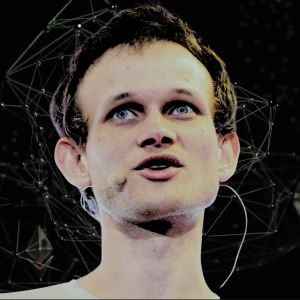
BitcoinWorld Vitalik Buterin’s Revolutionary Return to Decentralized Social Media Promises Authentic Web3 Communication In a significant development for the Web3 ecosystem, Ethereum founder Vitalik Buterin has declared his intention to fully return to decentralized social media platforms in 2025, marking a pivotal moment for blockchain-based communication networks seeking mainstream adoption. This announcement comes during a period of accelerated development in decentralized social protocols, with Buterin emphasizing that communication tools must align with the long-term interests of their members to foster better societal outcomes. His renewed commitment signals a strategic shift toward platforms prioritizing intrinsic value over speculative token incentives. Vitalik Buterin’s Decentralized Social Media Vision for 2025 Vitalik Buterin articulated his perspective on decentralized social media during a recent virtual summit hosted by the Ethereum Foundation. He specifically criticized previous social projects that overemphasized token incentives for content creators. According to Buterin, this approach frequently resulted in surges of low-quality content and tokens that lost their entire value within twelve to twenty-four months. Consequently, he advocates for platforms operated by individuals who genuinely believe in their intrinsic value and prioritize solving core communication problems. Buterin’s analysis aligns with broader industry observations about the evolution of Web3 social platforms. Initially, many projects launched between 2020 and 2023 focused heavily on financialization mechanisms. However, user retention metrics revealed significant shortcomings in these models. For instance, platforms like Steemit demonstrated early promise but struggled with content quality and sustainable token economics. Buterin’s renewed focus suggests a maturation phase for decentralized social media, emphasizing utility over speculation. The Technical Architecture of Modern Decentralized Social Networks Decentralized social media platforms operate on fundamentally different technical architectures compared to traditional centralized services. These networks typically utilize blockchain technology, decentralized storage solutions, and cryptographic protocols to give users control over their data and social graphs. The table below illustrates key differences between traditional and decentralized social media models: Aspect Traditional Social Media Decentralized Social Media Data Ownership Platform controls user data Users control their own data Content Moderation Centralized algorithms and teams Community-driven mechanisms Monetization Platform captures advertising revenue Creators receive direct value Interoperability Closed ecosystems Open protocols and standards Censorship Resistance Subject to platform policies Enhanced through decentralization Buterin specifically highlighted Lens Protocol as a prime example of this new approach. Lens represents a composable and decentralized social graph that enables users to own their connections and content. Built on the Polygon blockchain, Lens allows developers to create diverse social applications while maintaining user sovereignty. Buterin confirmed his plans to increase his activity on Lens as part of his renewed commitment to decentralized social ecosystems. Historical Context and Industry Evolution The decentralized social media landscape has undergone substantial transformation since its early iterations. Initial experiments with blockchain-based social platforms emerged around 2016, with projects like Steem and Minds gaining attention. However, these early platforms faced significant challenges including scalability limitations, poor user experiences, and unsustainable tokenomics. The current generation of platforms, including Lens, Farcaster, and Bluesky, addresses these issues through improved technical architectures and more thoughtful incentive designs. Industry analysts note that Buterin’s renewed engagement coincides with measurable growth in decentralized social platforms. According to DappRadar data, monthly active users on leading Web3 social applications increased by approximately 300% between January 2024 and December 2024. This growth trajectory suggests increasing mainstream interest in alternatives to traditional social media platforms. Furthermore, regulatory developments concerning data privacy and platform accountability have created favorable conditions for decentralized alternatives. Core Principles for Sustainable Decentralized Social Networks Buterin outlined several fundamental principles that should guide the development of sustainable decentralized social media platforms. First, he emphasized that decentralization fosters necessary competition among service providers. This competition theoretically leads to better alignment with user interests over time. Second, he stressed the importance of focusing on intrinsic value rather than speculative token mechanics. Third, he advocated for governance models that distribute power among stakeholders rather than concentrating it within centralized entities. The Ethereum founder identified several specific problems that decentralized social media must address effectively: Content discovery algorithms that prioritize quality over engagement metrics Reputation systems that resist manipulation and sybil attacks Scalable infrastructure capable of supporting millions of users Intuitive interfaces that minimize the complexity of blockchain technology Sustainable economic models that reward creators without encouraging spam These challenges represent significant technical and social hurdles for developers. However, recent advancements in zero-knowledge proofs, layer-2 scaling solutions, and decentralized identity protocols provide new tools for addressing these issues. Buterin’s involvement suggests increased resources and attention will flow toward solving these fundamental problems. Comparative Analysis of Leading Decentralized Social Platforms The current landscape features several prominent decentralized social platforms, each with distinct approaches and technical implementations. Lens Protocol, which Buterin specifically mentioned, utilizes a modular architecture where social relationships exist as non-fungible tokens (NFTs) on the blockchain. This design enables users to transfer their social connections between different applications built on the protocol. Meanwhile, competing platforms like Farcaster employ alternative architectures focused on different trade-offs between decentralization and performance. Industry experts observe that Buterin’s endorsement carries substantial weight within the Web3 community. His previous predictions and technical assessments have frequently influenced development priorities across the blockchain ecosystem. Consequently, his renewed focus on decentralized social media may accelerate innovation and investment in this sector. Venture capital firms have already increased their allocations to Web3 social projects throughout 2024, with total funding exceeding $500 million according to Crunchbase data. Practical Implications for Users and Developers Buterin’s announcement has immediate practical implications for both users and developers within the Web3 ecosystem. For everyday users, his increased participation signals growing legitimacy and potential longevity for decentralized social platforms. Users can expect continued improvements in interface design and functionality as development resources increase. For developers, Buterin’s focus provides clearer direction about which technical approaches and philosophical principles merit prioritization. The Ethereum founder’s commitment also influences broader industry dynamics. Traditional social media companies have begun exploring decentralized technologies, with Meta previously announcing experiments with blockchain-based identity systems. Buterin’s renewed advocacy may intensify competitive pressures on established platforms to adopt more user-centric approaches. Additionally, regulatory bodies worldwide are examining how existing frameworks apply to decentralized social networks, with Buterin’s public statements potentially informing these policy discussions. Conclusion Vitalik Buterin’s decision to fully return to decentralized social media represents a significant milestone for the Web3 communication landscape. His emphasis on platforms that prioritize long-term member interests over short-term token incentives reflects maturing understanding within the blockchain community. By focusing on intrinsic value and core problem-solving, Buterin advocates for a more sustainable approach to decentralized social networking. His specific endorsement of Lens Protocol highlights one promising implementation of these principles. As decentralized social media continues evolving throughout 2025, Buterin’s renewed engagement will undoubtedly shape development priorities and user adoption patterns across the ecosystem. FAQs Q1: What exactly is decentralized social media? Decentralized social media refers to online platforms built on blockchain technology and decentralized protocols rather than centralized servers. These networks give users ownership of their data, content, and social connections through cryptographic principles. Q2: Why did Vitalik Buterin criticize previous token-incentivized social platforms? Buterin observed that excessive focus on token rewards often led to low-quality content creation and unsustainable token economics. Many early platforms experienced rapid inflation of token supplies and corresponding value collapses, undermining long-term viability. Q3: What makes Lens Protocol different from earlier decentralized social networks? Lens Protocol implements a modular architecture where social relationships exist as transferable NFTs on the Polygon blockchain. This design enables greater interoperability between applications and gives users genuine ownership of their social graphs. Q4: How does decentralized social media address content moderation challenges? Decentralized platforms typically employ community-driven moderation mechanisms rather than centralized algorithms. Approaches include reputation systems, decentralized courts, and user-curated filters, though effective solutions remain an active area of development. Q5: What practical benefits might users experience on decentralized social platforms? Users potentially gain greater control over their data, reduced platform dependency, enhanced privacy protections, direct monetization opportunities, and censorship-resistant communication channels, though trade-offs exist in user experience and scalability. This post Vitalik Buterin’s Revolutionary Return to Decentralized Social Media Promises Authentic Web3 Communication first appeared on BitcoinWorld .