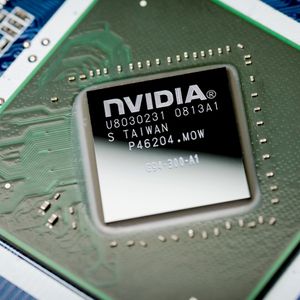
The US Senate approved a bipartisan law late Thursday requiring leading artificial intelligence chipmakers Nvidia Corp. and Advanced Micro Devices Inc. (AMD) to prioritize American customers before fulfilling orders for China. But the world’s second-largest economy might not need Nvidia chips after all. The bill, co-sponsored by Senator Jim Banks of Indiana and Senator Elizabeth Warren of Massachusetts as part of the annual defense policy bill, limits chip exports to China and other nations considered adversarial. “Today, the Senate acted to make sure American customers, including small businesses and startups, aren’t forced to wait in line behind China’s tech giants when purchasing the latest AI chips,” Warren said in a statement following the vote. At the same time, teams of customs officers have been deployed to major ports in China to conduct inspections of semiconductor shipments and warning companies against using American AI chip imports, according to multiple sources familiar with the operations. US House and Senate clash in AI export bill According to Bloomberg, the US House of Representatives passed its own version of the defense bill in September that excluded the export-control language. Lawmakers in both chambers must now reconcile the differences before the final package can become law. Industry groups and US tech companies are worried the proposed restrictions will harm innovation and competitiveness. Nvidia, whose products power much of the world’s AI infrastructure, said the Senate is focusing on “a non-existent problem” and America is its largest market. A summer deal between the Trump administration and chipmakers Nvidia and AMD saw the US ease certain export restrictions, allowing them to sell modified chips to China. However, the latest Senate move threatens to reverse those relaxations. Beijing chip import crackdown China was initially focused on keeping domestic companies away from Nvidia’s China-specific AI chips, but the inspections have since broadened to include all advanced semiconductor products from America. Until recently, Chinese customs authorities rarely intervened in chip imports as long as duties were paid. Officials have also been asked to identify potential smuggling operations of high-end chips that violate US export bans. According to the Financial Times , at least $1 billion worth of Nvidia’s top AI chips were smuggled into China between May and August. Chinese authorities had allowed local companies to use Nvidia’s H20 and RTX Pro 6000D models, chips that comply with US export controls. Guidance from the Cyberspace Administration of China (CAC) instructed tech giants ByteDance and Alibaba to stop purchases and testing of these products in mid-September. These directives came just weeks after the Trump administration lifted its earlier export ban on the H20 and Nvidia introduced the RTX Pro 6000D as a compliant chip for Chinese buyers. Two people familiar with the inspections said customs officers have also begun investigating if companies made false declarations in past semiconductor imports. One of the cases involved a US quantitative trading firm, Tower Research, which is reportedly under watch for allegedly smuggling advanced hardware. China is encouraging domestic chip production Beijing’s regulatory actions coincide with a broader industrial strategy to expand domestic semiconductor manufacturing. According to officials, China plans to triple its production of advanced chips next year, an ambitious target designed to meet local demand previously satisfied by Nvidia’s products. Tech heads in the country believe that local manufacturers have now achieved performance standards comparable to Nvidia’s China-specific processors, such as the H20. Chinese-based tech giant Huawei is developing homegrown alternatives to semiconductor technologies from Nvidia, Dutch equipment manufacturer ASML, South Korea’s SK Hynix, and Taiwan’s Semiconductor Manufacturing Company (TSMC). The United States imposed sanctions on Huawei in 2019, cutting the company off from foreign suppliers and advanced chipmaking tools. Since then, Huawei has been quietly rebuilding its semiconductor supply chain and investing heavily in domestic production capacity. A source close to the matter revealed that the corporation is supporting the establishment of additional chip production facilities in Shanghai, Ningbo, and Qingdao. Join a premium crypto trading community free for 30 days - normally $100/mo.