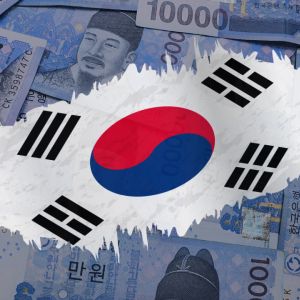
South Korea’s President Lee Jae-Myung has warned that his country may be saddled with an outcome similar to the 1997 Asian meltdown if it caves to current U.S. trade demands without strong safeguards in place. The warning comes as trade negotiations with Washington have stalled, leaving the future of Seoul’s economic prospects uncertain. The United States is pressuring South Korea to provide $350 billion in cash, an approach President Lee Jae-Myung compared to a neighbor demanding money at the door. Speaking to Reuters, Lee said the deal reflects President Donald Trump’s hardline style on tariffs. The verbal agreement, reached in July, would see Washington lower tariffs on South Korean exports in exchange for the massive investment. However, Lee warned that the U.S.’s insistence on cash transfers could destabilize Seoul’s economy. However, Lee cautioned that South Korea’s financial system would face serious instability if the dollars were provided without a swap-line agreement. He said that without safety measures, the country could again face conditions similar to the 1997 financial crisis, when it was forced to seek a massive bailout from the International Monetary Fund (IMF). Lee emphasised that the country won’t accept conditions that would surrender decisions on investments wholly to the U.S. He added that there should be guarantees of commercial practicability for the projects and safeguards to prevent South Korean companies from being exposed to unnecessary financial risk. Seoul pushes back in talks Talks with Washington have lingered for weeks since the two countries have different stands . Whereas the U.S. wants upfront commitments, Seoul seeks flexibility to control the flow of capital out of the country. Officials say such a dollar swap would help cushion the impact on the won, Korea’s currency, and keep its markets from destabilizing. South Korea also highlights that it does not have the same financial reserves as Japan, which struck a similar agreement with the U.S. in July. Unlike Tokyo, Seoul has no permanent swap line with Washington, and its foreign exchange reserves are smaller. Commerce Secretary Howard Lutnick argued that Seoul must take the deal or face tariffs, effectively repeating President Donald Trump’s longstanding line on trade talks. However, South Korean officials have said that the proposals so far offer no guarantee of a return on investment in the projects. Lee’s policy team has floated putting in “safeguards” to ensure only “commercially feasible projects will be funded.” However, Washington is said to have pushed back on these efforts and insisted that Trump should still have control over where the financing is sent. Tensions spill beyond trade The trade concerns are playing out amid other tensions in the broader U.S.–South Korea relationship. Earlier this month, one at a Hyundai battery plant in Georgia detained over 300 South Korean workers. The reports of the workers in restraints set off fury in Seoul, where many cautioned that it would discourage future Korean investments in the United States. Lee, however, attempted to soften the fallout. He said he did not think the raid was deliberate, and praised Trump for later offering clemency to the workers. Nonetheless, he acknowledged that the incident had rattled public opinion back home. South Korea also faces mounting security challenges due to deepening military cooperation between China, Russia, and North Korea, which Lee described as a dangerous escalation. He warned that South Korea now stands at the sharp edge of a new geopolitical contest between authoritarian and democratic powers. Lee is expected to travel to New York next week for the United Nations General Assembly, at which he will be the first South Korean president to preside over a meeting of the UN Security Council. Trade, however, is not explicitly on his schedule during the visit. Pressure at home to end the standoff continues building, however. Businesses in South Korea worry about a double punch of tariffs and unclear investment rules. Financial analysts have said that even the appearance of uncertainty could hurt the won and drive out capital. Don’t just read crypto news. Understand it. Subscribe to our newsletter. It's free .