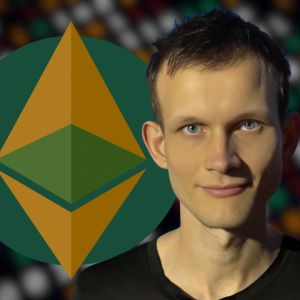
Ethereum Co-Founder Vitalik Buterin said on Thursday that increasing the network’s bandwidth is much safer than reducing latency. He argued that the network can scale with Peer-to-Peer Data Availability Sampling (PeerDAS) and Zero-Knowledge Proofs (ZKPs). Buterin acknowledged that PeerDAS and ZKPs enable Ethereum to scale thousands of times compared to the status quo. He also revealed an analysis with pre- and post-sharding, showing numbers have become far more favorable than before. The crypto mogul also acknowledged that there’s nothing that prevents combining extreme scale with decentralization on the ETH blockchain. Buterin says Ethereum can decrease latency without tradeoffs Increasing bandwidth is safer than reducing latency With PeerDAS and ZKPs, we know how to scale, and potentially we can scale thousands of times compared to the status quo. The numbers become far more favorable than before (eg. see analysis here, pre and post-sharding… — vitalik.eth (@VitalikButerin) January 8, 2026 Buterin revealed that reducing latency is constrained by the speed of light and the need to support nodes in rural environments worldwide, as well as in-home and commercial environments outside of data centers. He also noted that the need to support censorship-resistance and anonymity for nodes has reduced latency. Ethereum’s co-founder added that reducing latency is limited by the fact that running a node in a non-super-concentrated location must be impossible and also economically viable. He argued that more and more people will stake in New York over time if staking outside the city drops a user’s revenue by 10%. “Ethereum itself must pass the walkaway test, and so we cannot build a blockchain that depends on constant social re-juggling to ensure decentralization. Economics cannot handle the entire load, but it must handle most.” – Vitalik Buterin , Co-Founder of Ethereum. Buterin revealed that Ethereum can reduce latency more from the present-day situation without tradeoffs. He believes ETH can decrease latency by making P2P improvements, especially in erasure coding. He said the initiative can reduce message propagation times without requiring individual nodes to have lower bandwidth. The crypto mogul added that using an available chain with a smaller node count per slot, such as 512 instead of 30,000, can eliminate the need for an aggregation step. He said the initiative can enable the entire latency reduction to occur in one subnet. Buterin acknowledged that P2P improvements and using chains with smaller node counts per slot plausibly purchase ETH 3-6x. He also believes moderate latency can be lowered to a 2-4 level. Buterin referred to Ethereum as the world’s heartbeat, arguing that those planning to build applications that are faster than the heartbeat will require off-chain components. He said it’s a big part of why L2s will continue to have a role even in a greatly scaled Ethereum. Buterin also believes that artificial intelligence will necessitate applications that are faster than the heartbeat, regardless of what developers do. He considers AI-focused applications as inevitable, which he says will require L2 blockchains. The crypto mogul also agrees that it would be costly to make it viable to run a staking node on Mars because even Bitcoin does not focus on that. He said Ethereum ultimately belongs to Tera, and that the blockchain’s L2s will serve both hyper-localized needs in its cities, and hyper-scaled needs globally. Ethereum solves blockchain’s trilemma Ethereum’s co-founder acknowledged earlier this week that ETH had solved blockchain’s trilemma through zkEVMs and PeerDAS technology. He said the combination of both technologies now runs on the mainnet, which has enabled decentralization, high bandwidth, and consensus. He argued that the network’s improvements have shifted ETH into a more powerful and decentralized network. The Ethereum Foundation also plans to enhance the network’s security, requiring teams to achieve 128-bit provable security by the end of the year. The team also seeks to achieve 100-bit security by May 2026. The Ethereum Foundation also requires teams to achieve mandatory integration with the soundcalc security estimation tool by next month. The foundation warned last month that attackers can forge anything if they can already forge a proof of identity. The firm maintained that performance gains cannot compromise cryptographic integrity. George Kadianakis from the foundation’s cryptography team notes that the team’s verification work will reach its full potential once teams have met the targets and the zkVM architecture stabilizes. Buterin also believes that Ethereum needs to do more to meet its stipulated goals. The smartest crypto minds already read our newsletter. Want in? Join them .