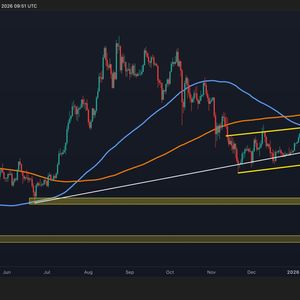
BitcoinWorld Bitcoin Price Prediction: Bernstein’s Crucial $60K Bottom Forecast Signals Impending Rebound NEW YORK, March 2025 – Wall Street asset manager Bernstein has delivered a significant forecast for Bitcoin investors, projecting the cryptocurrency will establish a crucial bottom near $60,000 before initiating a substantial recovery phase this year. This analysis arrives during a period of heightened market uncertainty, providing institutional perspective on Bitcoin’s trajectory amid evolving macroeconomic conditions. According to reporting from The Block, Bernstein’s research team emphasizes that current price movements represent a late-cycle correction rather than the beginning of a prolonged bear market, a distinction with profound implications for portfolio strategy. Bitcoin Price Prediction: Analyzing the $60,000 Support Thesis Bernstein’s projection centers on Bitcoin finding substantial support around the previous cycle’s all-time high of approximately $60,000. Historically, former resistance levels often transform into support during subsequent market phases, creating psychological and technical barriers. The firm’s analysis suggests this level represents a convergence point where institutional buying interest typically intensifies. Furthermore, the $60,000 threshold aligns with multiple on-chain metrics including realized price, cost basis for long-term holders, and miner breakeven levels. This confluence of factors creates what analysts describe as a “high-probability accumulation zone” for strategic investors. Market data reveals several supporting indicators for this thesis. Glassnode analytics show that the $58,000 to $62,000 range represents the average acquisition price for coins held between six months and three years. Additionally, Bitcoin’s 200-week moving average, a historically reliable bull market support line, currently trends toward this region. Bernstein’s technical team notes that while short-term volatility may test levels slightly below $60,000, the broader market structure suggests resilience around this psychological benchmark. The firm’s quantitative models incorporate previous cycle behavior where Bitcoin consolidated near prior cycle highs before resuming upward momentum. Crypto Market Recovery Drivers Identified Bernstein’s optimistic recovery outlook stems from five interconnected factors that differentiate the current environment from previous bear markets. First, the institution-led adoption cycle continues progressing despite price fluctuations. Major financial institutions have maintained cryptocurrency divisions, with several expanding custody and trading services throughout 2024. Second, U.S. regulatory policy has evolved toward clearer frameworks, particularly following the approval of spot Bitcoin ETFs and ongoing legislative developments. This regulatory maturation reduces systemic uncertainty that previously hampered institutional participation. Third, Bitcoin ETF flows demonstrate remarkable stability compared to historical patterns. While periodic outflows occur during market stress, net inflows remain positive across most major products since their launch. Fourth, Bitcoin miners have successfully diversified revenue streams beyond block rewards, incorporating high-performance computing services and energy arbitrage strategies. This diversification enhances network security during lower-price environments. Finally, Bernstein highlights Bitcoin’s relative valuation compared to gold, suggesting the digital asset remains undervalued on a market capitalization basis despite its technological advantages in settlement finality and programmability. Institutional Perspective on Market Cycles Bernstein’s analysis provides crucial context about cryptocurrency market cycles that often elude retail investors. The firm emphasizes that Bitcoin experiences distinct phases within broader adoption cycles, with corrections of 20-30% occurring regularly during secular bull markets. Historical data from CoinMetrics reveals that during the 2016-2017 cycle, Bitcoin experienced five corrections exceeding 25% before reaching its ultimate peak. Similarly, the 2020-2021 cycle witnessed three major corrections exceeding 20% during its ascent. This pattern suggests that significant pullbacks represent healthy consolidation rather than trend reversals when fundamental adoption metrics remain strong. The current correction phase coincides with several positive fundamental developments often overlooked during price declines. On-chain analytics firm IntoTheBlock reports that the number of addresses holding 1+ BTC recently reached a new all-time high, indicating accumulation during weakness. Meanwhile, Bitcoin’s hash rate continues setting records, demonstrating unprecedented network security. These divergences between price action and network fundamentals typically precede recovery phases according to historical analysis. Bernstein’s researchers specifically note that similar divergences occurred before major rallies in both 2019 and 2020. Comparative Analysis: Bitcoin Versus Traditional Assets Bernstein’s report includes a revealing comparison between Bitcoin and traditional safe-haven assets, particularly gold. While gold has appreciated approximately 12% year-to-date in 2025, Bitcoin has experienced consolidation after its substantial 2024 gains. This performance divergence creates what analysts term a “catch-up potential” scenario. The report notes that Bitcoin’s market capitalization remains approximately one-tenth of gold’s, suggesting significant room for expansion as digital asset adoption progresses. Furthermore, Bitcoin’s fixed supply schedule contrasts with gold’s ongoing production, creating fundamentally different inflation hedge characteristics. Bitcoin vs. Gold: Key Metrics Comparison (2025) Metric Bitcoin Gold Year-to-Date Performance -8% +12% Market Capitalization $1.2 trillion $15.8 trillion Annual Supply Increase ~1.8% ~1.5-2% Institutional Holdings Growth +42% (2024) +3% (2024) Transaction Settlement Time 10 minutes – 1 hour 2-5 business days The analysis further examines portfolio allocation trends among institutional investors. According to Bloomberg Intelligence, average cryptocurrency allocations in multi-asset portfolios have increased from 0.5% in 2021 to approximately 1.8% in early 2025. While still modest, this represents a 260% increase during a period often characterized as a “crypto winter.” Bernstein projects this allocation could reach 3-5% within institutional portfolios by 2026, potentially driving hundreds of billions in additional capital inflows. This gradual but persistent institutional adoption creates what the firm describes as a “structural bid” beneath the market that differs fundamentally from previous cycles dominated by retail speculation. Miner Economics and Network Security Bitcoin mining operations have undergone substantial transformation since the 2022 market downturn, developing resilience that Bernstein identifies as a crucial recovery factor. Following the 2024 halving event that reduced block rewards by 50%, miners successfully diversified revenue streams through several innovative approaches. Many mining facilities now allocate computational resources to artificial intelligence training, scientific research, and renewable energy grid stabilization. This diversification reduces miners’ reliance on Bitcoin price appreciation for profitability, decreasing forced selling pressure during market corrections. The report highlights several key developments in miner economics: Revenue Diversification: Leading miners now generate 15-30% of revenue from non-Bitcoin sources Energy Efficiency: Average mining efficiency has improved 40% since 2022 through next-generation hardware Geographic Distribution: Mining has decentralized significantly with growing operations in Latin America, Africa, and the Middle East Public Market Access: Multiple mining companies now trade on major exchanges, improving capital access This miner resilience directly supports Bernstein’s recovery thesis by ensuring network security remains robust throughout market cycles. Bitcoin’s hash rate recently achieved 650 exahashes per second, representing a 120% increase from the previous cycle’s peak. This metric, often described as the network’s “security budget,” demonstrates continued infrastructure investment despite price volatility. Strong hash rate growth during consolidation phases historically correlates with subsequent price appreciation, as it signals long-term confidence from capital-intensive network participants. Regulatory Environment and Policy Support The U.S. regulatory landscape for cryptocurrency has evolved substantially since 2023, creating what Bernstein describes as “unprecedented policy clarity” for institutional participants. Following the approval of spot Bitcoin ETFs in January 2024, regulatory agencies have progressed toward comprehensive frameworks for digital asset classification and oversight. Several legislative proposals currently advancing through Congress aim to establish clear jurisdictional boundaries between regulatory agencies while providing consumer protections. This regulatory maturation reduces one of the traditional barriers to institutional adoption: legal uncertainty. Internationally, policy developments further support Bernstein’s recovery outlook. The European Union’s Markets in Crypto-Assets (MiCA) regulation took full effect in December 2024, creating a harmonized regulatory framework across 27 nations. Similarly, the United Kingdom has implemented its Financial Services and Markets Act provisions for digital assets, while Hong Kong and Singapore have established comprehensive licensing regimes. This global regulatory convergence provides multinational institutions with clearer compliance pathways, potentially accelerating adoption. Bernstein’s policy analysts note that while regulatory approaches differ by jurisdiction, the overarching trend toward formal recognition and structured oversight represents a net positive for institutional participation. Conclusion Bernstein’s Bitcoin price prediction offers a data-driven perspective during a period of market uncertainty, projecting that Bitcoin will establish a durable bottom near $60,000 before initiating its next recovery phase. This analysis rests on multiple converging factors including continued institutional adoption, evolving regulatory frameworks, resilient miner economics, and favorable comparative valuation against traditional assets like gold. The firm emphasizes that current market movements represent a late-cycle correction within a broader adoption trend rather than a bear market reversal. For investors, this distinction carries significant strategic implications, suggesting that accumulation during consolidation periods may prove advantageous as fundamental adoption metrics continue progressing. While cryptocurrency markets remain inherently volatile, Bernstein’s institutional perspective provides valuable context for navigating the current environment and positioning for potential recovery. FAQs Q1: What specific factors does Bernstein cite for Bitcoin’s projected recovery? Bernstein identifies five key factors: Bitcoin’s relative valuation compared to gold, continuation of institution-led adoption cycles, favorable U.S. regulatory developments, limited ETF outflows despite market volatility, and successful diversification of miner revenue streams beyond block rewards. Q2: How does the $60,000 support level relate to previous Bitcoin cycles? The $60,000 level approximately matches Bitcoin’s previous all-time high from the 2021 cycle. Historically, former cycle highs often transform into support levels during subsequent market phases, creating psychological and technical barriers that attract institutional buying interest. Q3: What distinguishes the current market phase from a full bear market according to Bernstein? Bernstein notes that fundamental adoption metrics continue progressing despite price consolidation, including growing institutional allocations, increasing hash rate, regulatory clarity advancements, and expanding real-world use cases. These divergences between price action and fundamentals typically characterize corrections within ongoing bull markets rather than bear market beginnings. Q4: How have Bitcoin miners adapted to maintain profitability after the 2024 halving? Miners have diversified revenue streams through high-performance computing services, artificial intelligence training, scientific research computation, and energy grid stabilization services. This diversification reduces reliance on Bitcoin price appreciation and decreases forced selling pressure during market corrections. Q5: What role do Bitcoin ETFs play in Bernstein’s recovery outlook? Spot Bitcoin ETFs have created a structural inflow mechanism for institutional capital, with net positive flows maintained throughout most of 2024 despite periodic volatility. These regulated products lower barriers to institutional participation and provide price support through consistent demand, particularly during accumulation phases. This post Bitcoin Price Prediction: Bernstein’s Crucial $60K Bottom Forecast Signals Impending Rebound first appeared on BitcoinWorld .