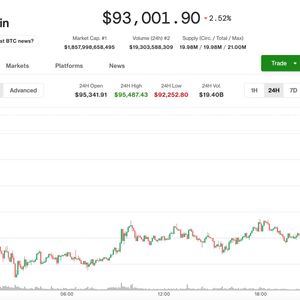
BitcoinWorld Bitcoin Price Faces a Pivotal Shift: New Market Structure, Institutional Funds, and Macroeconomics Now Drive Value NEW YORK, March 2025 – The fundamental drivers of Bitcoin’s market value are undergoing a profound transformation. According to a pivotal new analysis, the cryptocurrency’s price trajectory is now primarily governed by three critical variables: a new market structure, institutional fund flows, and the macroeconomic environment. This shift signals a potential departure from the historically dominant four-year halving cycle that has characterized Bitcoin’s past. Bitcoin Price Enters a New Era of Market Structure Research from prominent firms NYDIG and Wintermute, reported by CoinDesk, indicates a significant evolution. The conventional crypto market cycle, tightly coupled to Bitcoin’s block reward halving events, may be concluding. Consequently, the market is witnessing a structural change. This change is largely driven by the maturation and massive influx of capital into regulated financial products. Spot Bitcoin Exchange-Traded Funds (ETFs), approved in the United States in early 2024, have fundamentally reshaped the investment landscape. These products provide a seamless, familiar conduit for traditional capital. They have effectively demystified Bitcoin for a vast pool of institutional and retail investors who were previously hesitant to engage with crypto-native exchanges. Traditional Cycle: Historically, price action was heavily influenced by the predictable, quadrennial reduction in new Bitcoin supply (halving), leading to speculative boom-and-bust periods. New Structure: The market now integrates continuous, large-scale capital flows from ETFs and other institutional vehicles, creating a more complex and potentially stabilizing influence. This transition suggests Bitcoin and other cryptocurrencies are beginning a gradual integration into the broader global financial system as a more recognized asset class. The Unprecedented Influence of Institutional Funds The actions of institutional investors now represent a primary catalyst for Bitcoin’s price. Daily net flows into U.S. spot Bitcoin ETFs have become a key metric watched by analysts globally. Significant inflows signal strong institutional conviction and directly increase buying pressure on the underlying asset. Conversely, sustained outflows can indicate profit-taking or risk-off sentiment among major players. Furthermore, other institutional products like futures contracts, regulated custody solutions, and corporate treasury allocations contribute to this new dynamic. The behavior of these sophisticated actors, who often employ different strategies and have longer time horizons than typical retail traders, is introducing new patterns of volatility and support levels. Expert Analysis on the Institutional Shift Market analysts emphasize that institutional participation changes the correlation structure of Bitcoin. While it was once seen as a purely speculative tech asset, its price now shows more frequent, albeit complex, relationships with traditional macro indicators. This is because large funds manage Bitcoin within diversified portfolios, making its performance sensitive to broader financial conditions. The sheer scale of capital these institutions command means their collective decisions can outweigh historical cyclical patterns driven by retail sentiment alone. Macroeconomic Environment as a Dominant Force The third crucial variable is the overarching macroeconomic climate. In 2025, factors such as central bank interest rate policies, inflation trends, geopolitical tensions, and foreign exchange movements exert a powerful influence on Bitcoin’s price. For instance, in periods of high inflation or currency devaluation, Bitcoin may attract flows as a perceived hedge, similar to gold. However, during periods of aggressive monetary tightening and rising real yields, risk assets like Bitcoin often face headwinds as capital seeks safer returns. The evolving geopolitical landscape also plays a role, as digital assets can see increased adoption in regions facing economic sanctions or capital controls. Analysts now routinely dissect Federal Reserve meeting minutes and global economic data releases to gauge potential impacts on cryptocurrency markets. Retail Investor Behavior in the Evolving Landscape While institutions are a dominant new force, retail investor activity remains a significant variable. A key question for 2025 is whether retail investors will begin shifting capital from traditional equity markets into cryptocurrency assets at a larger scale. The ease of access provided by mainstream investment apps and ETFs could facilitate this rotation. If retail investors perceive greater long-term growth potential in crypto or seek diversification away from potentially overvalued stock markets, a substantial new wave of demand could emerge. This potential shift represents a synergistic relationship with institutional flows, rather than a replacement of the old cycle. Conclusion The analysis is clear: predicting the Bitcoin price now requires a multifaceted framework that extends far beyond the calendar of halving events. The convergence of a new market structure built on institutional products, the powerful currents of institutional fund flows, and the pervasive forces of the macroeconomic environment now form the core triad of influencers. Understanding the interaction between these three variables—market structure, institutional funds, and macroeconomics—will be essential for any serious analysis of Bitcoin’s value trajectory in 2025 and beyond. FAQs Q1: What is the traditional Bitcoin halving cycle? The traditional cycle refers to a roughly four-year pattern where Bitcoin’s price tends to surge in the 12-18 months following a “halving” event, where the reward for mining new blocks is cut in half, reducing the new supply rate. Q2: How do Bitcoin ETFs change the market structure? ETFs create a regulated, familiar pathway for massive institutional and retail investment, leading to more consistent daily capital flows and potentially reducing the dominance of speculative, halving-driven volatility. Q3: Why does macroeconomics affect Bitcoin now more than before? With major institutional players involved, Bitcoin is increasingly traded as part of larger global portfolios. This makes it more sensitive to interest rates, inflation data, and broader financial market sentiment. Q4: Can the halving still impact the Bitcoin price? Yes, the halving remains a fundamental supply-side event. However, its price impact may be moderated or overshadowed by the substantial daily demand and selling pressure from institutional ETF flows and macro conditions. Q5: What should investors watch in 2025 regarding Bitcoin? Key indicators include daily net flows into U.S. spot Bitcoin ETFs, statements and policies from major central banks (like the Federal Reserve), and broader equity market performance to gauge potential capital rotation. This post Bitcoin Price Faces a Pivotal Shift: New Market Structure, Institutional Funds, and Macroeconomics Now Drive Value first appeared on BitcoinWorld .