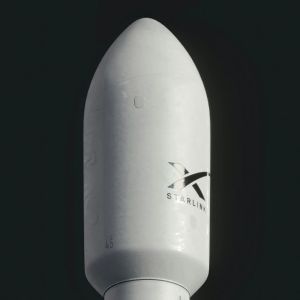
The Federal Communications Commission has granted SpaceX permission to launch an additional 7,500 second-generation Starlink satellites, bringing the total number of the company’s authorized satellites to 15,000 units. Only half of SpaceX’s proposed 30,000 satellites were approved for deployment by the Federal Communications Commission (FCC). SpaceX must deploy half of the satellites authorized by the Federal Communications Commission by December 2028. Full deployment is expected by December 2031. Will Elon Musk keep growing his Starlink constellation? The FCC’s Chairman, Brendan Carr, said the approval is “a game-changer for enabling next-generation services.” SpaceX also received approval to upgrade its satellites and operate across five different frequencies. The newly authorized satellites will provide direct-to-cell connectivity outside the United States and supplemental coverage within American borders. Next-generation mobile services will be available to deliver internet speeds reaching up to 1 gigabit per second, similar to high-speed fiber-optic connections. The FCC stated that these upgrades will help ensure no community is left without connectivity options. However, SpaceX must launch 50% of the maximum authorized second-generation satellites, place them in their assigned orbits, and have them operational by December 1, 2028. The remaining satellites must be launched by December 2031. The company also faces a November 2027 deadline to complete deployment of its 7,500 first-generation satellites. Why did the FCC approve half of SpaceX’s request? SpaceX initially asked for approval to deploy nearly 30,000 satellites, but the FCC refused to approve the deployment of the remaining 14,988, including those planned for operations above 600 kilometers altitude. The FCC explained that its cautious approach is because “the Gen2 Starlink Upgrade satellites remain untested on orbit.” The commission believes that authorizing half of the proposed number of satellites serves the public interest while also allowing them time to evaluate the performance of the upgraded satellite design. Jessica Rosenworcel, the predecessor to current FCC chief Carr, wanted more companies to compete with SpaceX’s satellite constellation in 2024. Starlink already controlled nearly two-thirds of all active satellites at that time. Its overwhelming number of active satellites has raised concerns about space safety and market dominance in the satellite internet sector. Amazon is attempting to challenge that dominance with its rebranded Project Kuiper satellite internet service, now referred to as Amazon Leo, starting in November 2025. Amazon began a preview of its services that same month and allowed select business customers to test the network using production hardware and software. The company plans to roll out the service more widely in 2026. The FCC granted Amazon permission to deploy 3,236 satellites, with requirements to launch and operate half the constellation by July 30, 2026, and the remainder by July 30, 2029. Last week, Starlink announced plans to increase space safety by lowering all satellites currently orbiting at approximately 550 kilometers to 480 kilometers throughout 2026. Satellites operating at lower altitudes will naturally deorbit more quickly if they fail. The focus on safety is due to a December incident in which one Starlink satellite experienced an anomaly in space, creating a small amount of debris and losing communications at an altitude of 418 kilometers. Claim your free seat in an exclusive crypto trading community - limited to 1,000 members.