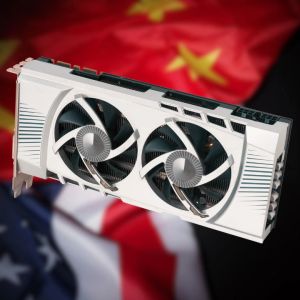
Amazon and Microsoft are backing the GAIN AI Act, legislation aimed at restricting Nvidia’s and other chipmakers’ ability to export advanced AI chips to China and other markets until domestic demand is fully met. The backing of the GAIN AI Act shows the growing competition for AI chips in the U.S. The Guaranteeing Access and Innovation for National Artificial Intelligence Act of 2025 (GAIN AI Act) was introduced in the U.S. House of Representatives on October 31, 2025. U.S. Senator Jim Banks (R-IN), a Member of the Senate Banking, Housing, and Urban Affairs Committee, stated that the Act ensures American-made technology is used to support U.S. security and economy before being transferred to foreign adversaries. U.S. pushes AI export limits for security According to the WSJ report, the GAIN AI Act is supported by AI startup Anthropic. The report stated that Microsoft openly endorsed the proposal, while representatives from Amazon’s cloud division told Senate staff members that they also backed it. Senate Minority Leader Chuck Schumer is among the prominent Democrats who favor the GAIN AI Act. He maintained that the bill is crucial to strengthening American leadership in AI and averting future chip shortages. Notably, the proposed legislation reflects Washington’s attempt to prioritize American interests in the face of concerns that China would utilize access to AI technologies to enhance its military capabilities. “As AI becomes more powerful, the risks to our national security become even more intense.” -Gina Raimondo, U.S. Commerce Secretary. Raimondo added that limiting the export of AI chips ensures that enemies cannot use AI technologies to gain a tactical military edge. She claimed that by preserving the technology, the U.S maintains both global stability and its capacity for innovation. Earlier this year, the Trump administration unveiled an AI Action Plan to achieve its goal of solidifying America’s position as a global leader in AI. The AI Action Plan primarily focused on the private sector and largely sidestepped a critical battlefield for AI’s future by establishing standards for its application in the military. China and Russia have made significant investments in AI, sparking a global technological arms race. The People’s Liberation Army (PLA) of China stressed the importance of “intelligentized warfare,” incorporating AI into all facets of its military tactics. On the other hand, Russia has concentrated on creating AI-enabled systems for automated command centers, hypersonic weapons, and electronic warfare. According to FutureWerx, the United States’ export controls are intended to counteract China and Russia’s breakthroughs by preventing rivals from obtaining essential AI components. Nvidia pushes back as export rules tighten Nvidia, which controls approximately 80% of the market for AI chips, has spent $3.5 million this year on a vigorous lobbying campaign against the measure. The tech firm claimed that the GAIN AI Act could lead to even stricter export regulations from Washington and potentially distort international semiconductor markets. Last month, Cryptopolitan reported that the White House reportedly faced tensions with Nvidia over trade regulatory policies imposed on U.S. export controls on semiconductors. According to the report, Nvidia reported that Strict export restrictions on its chip shipments would cost the company an extra $5.5 billion. The strict export laws were implemented following the tech company’s announcement that it would construct $500 billion worth of AI servers in the U.S. over the next four years, with assistance from partners like TSMC. On July 4, 2025, the U.S. President Donald Trump’s administration lifted restrictions on the export of chip design software to China. The U.S. Commerce Department informed all three companies, Synopsys, Cadence, and Siemens, that the export restrictions put in place in May had been lifted. The U.S. stopped selling China essential software tools used to design semiconductors in late May, in retaliation for Beijing’s effective stifling of rare earth exports, which rekindled tensions between the two nations after a trade truce was reached in Geneva earlier that month. If you're reading this, you’re already ahead. Stay there with our newsletter .